A patent filed July 25, 1967 described an instrument with unprecedented characteristics in the field of ophthalmology. It was designed for "breaking apart and removal of unwanted material", especially cataracts, using a handheld tip operating in the "ultrasonic range with an amplitude controllable up to several thousandths of an inch".
Charles D. Kelman, M.D., who was exploring cataract surgery through a small incision, collaborated with Anton Banko, then director of Cavitron's Research Group, to develop the phacoemulsification procedure. Banko then designed the original phacoemulsifier, inventing what has been hailed as an engineering marvel.
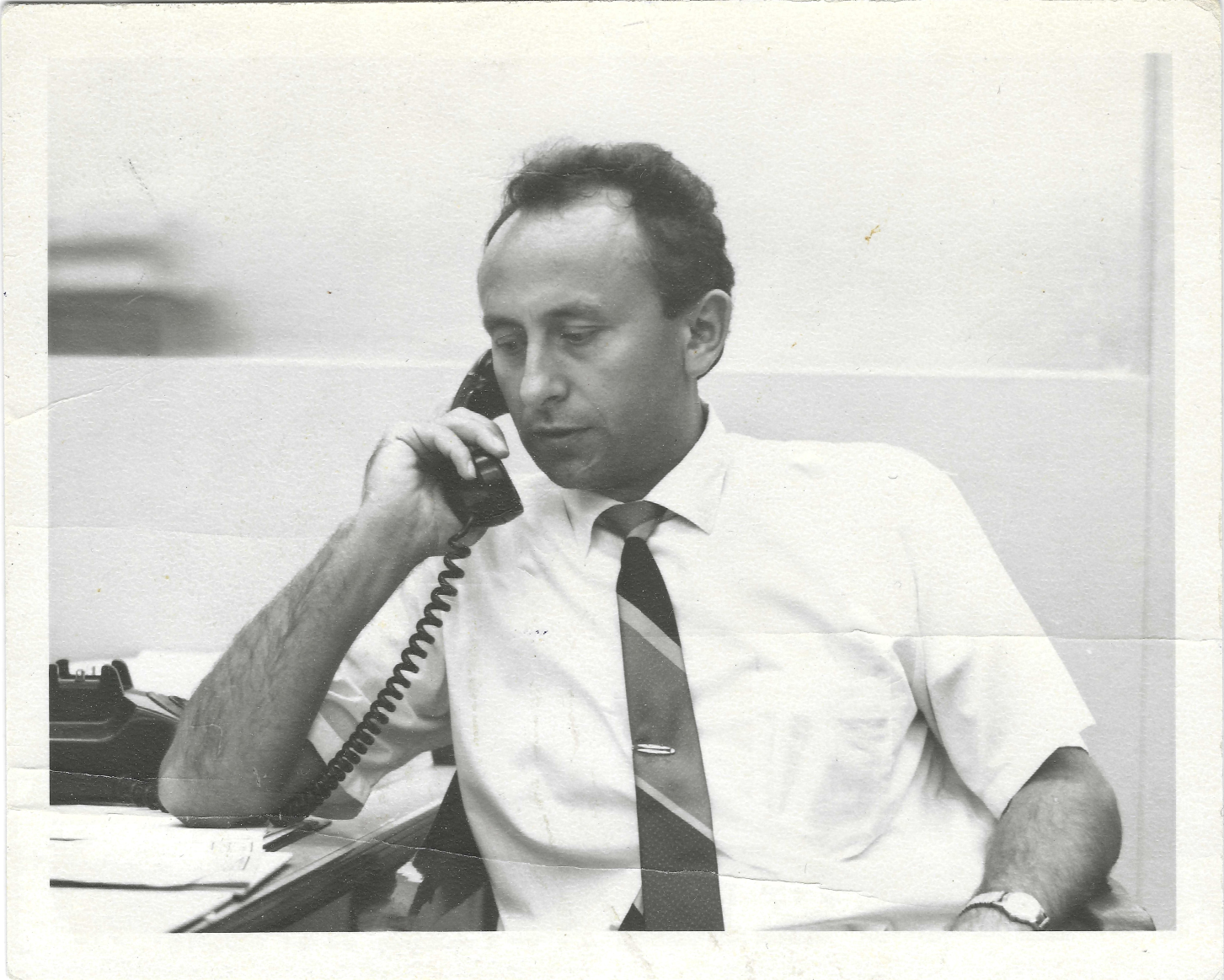
Anton Banko in 1964 “Manager of Research” at Cavitron Ultrasonics, Long Island City, New York.
This monumental improvement in cataract surgery transformed what used to be a week-long stay in a hospital with an incision across 50% of the eye, to a very small, suture-less incision, performed on an outpatient basis, which takes less than five minutes to complete. This pioneering work was described in Charles Kelman's book, Through My Eyes: The Story of a Surgeon Who Dared to Take on the Medical World, New York: Crown Publishers, 1985.
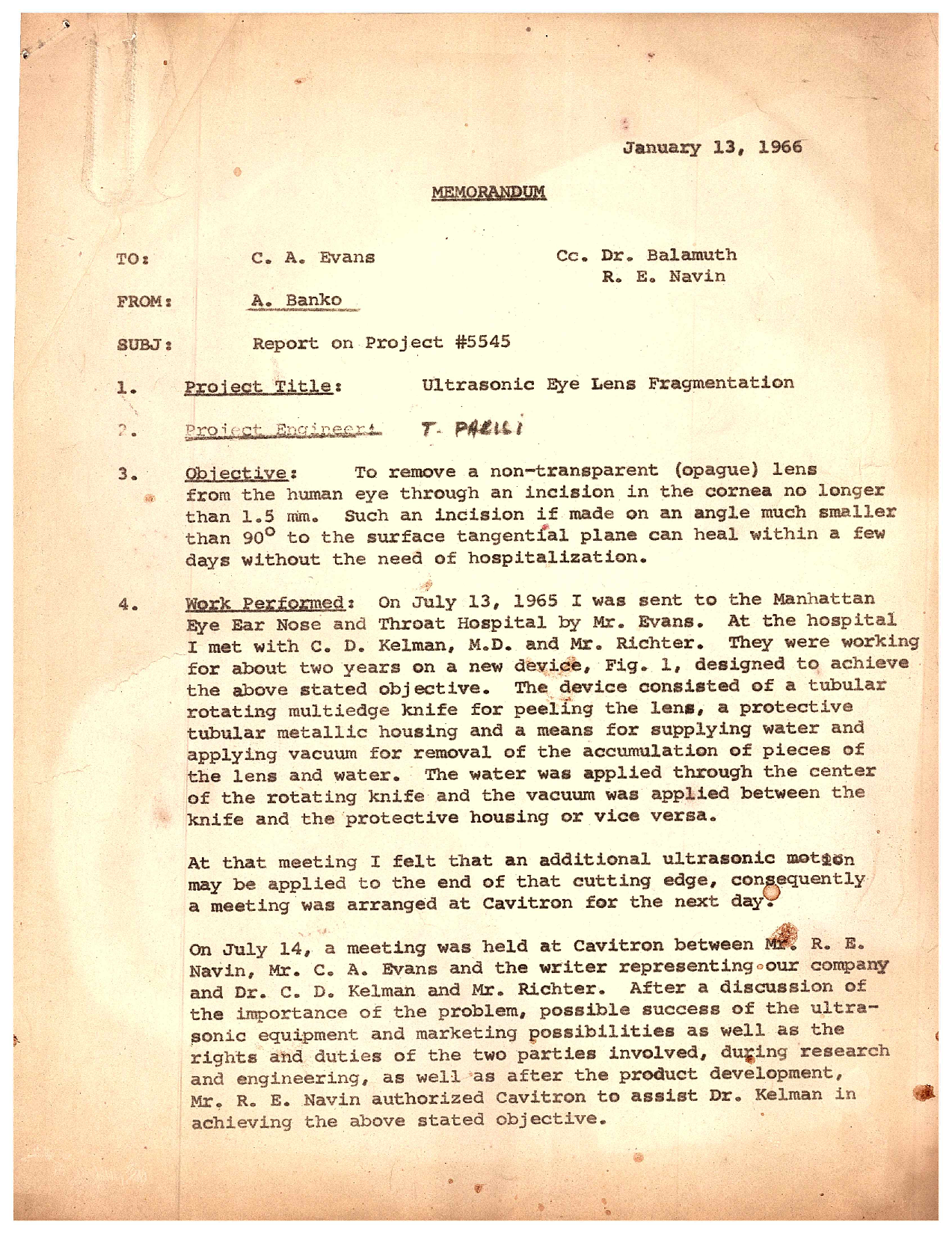
A historic Memorandum dated January 13, 1966, with the title Ultrasonic Eye Lens Fragmentation, was written by Anton Banko and distributed to the management of Cavitron Ultrasonics, describing his recommendation to use ultrasound vibration on the mechanical cutters that Charles Kelman was developing at that time. The Memorandum documents Anton Banko's first meeting with Charles Kelman on July 13, 1965, at Manhattan Eye and Ear Hospital.
Below are the detailed dates and copies of the original documentation that describes how modern cataract surgery began.
Memorandum written by Anton Banko describing the scope of the project: Ultrasonic Eye Lens Fragmentation.
After Anton visited Dr Kelman, at Manhattan Eye and Ear Hospital, the next day a meeting with all senior management was held at Cavitron Ultrasonics with Dr Kelman present and the project Ultrasonic Eye Lens Fragmentation was approved by Robert E. Navin, the President of Cavitron Ultrasonics.
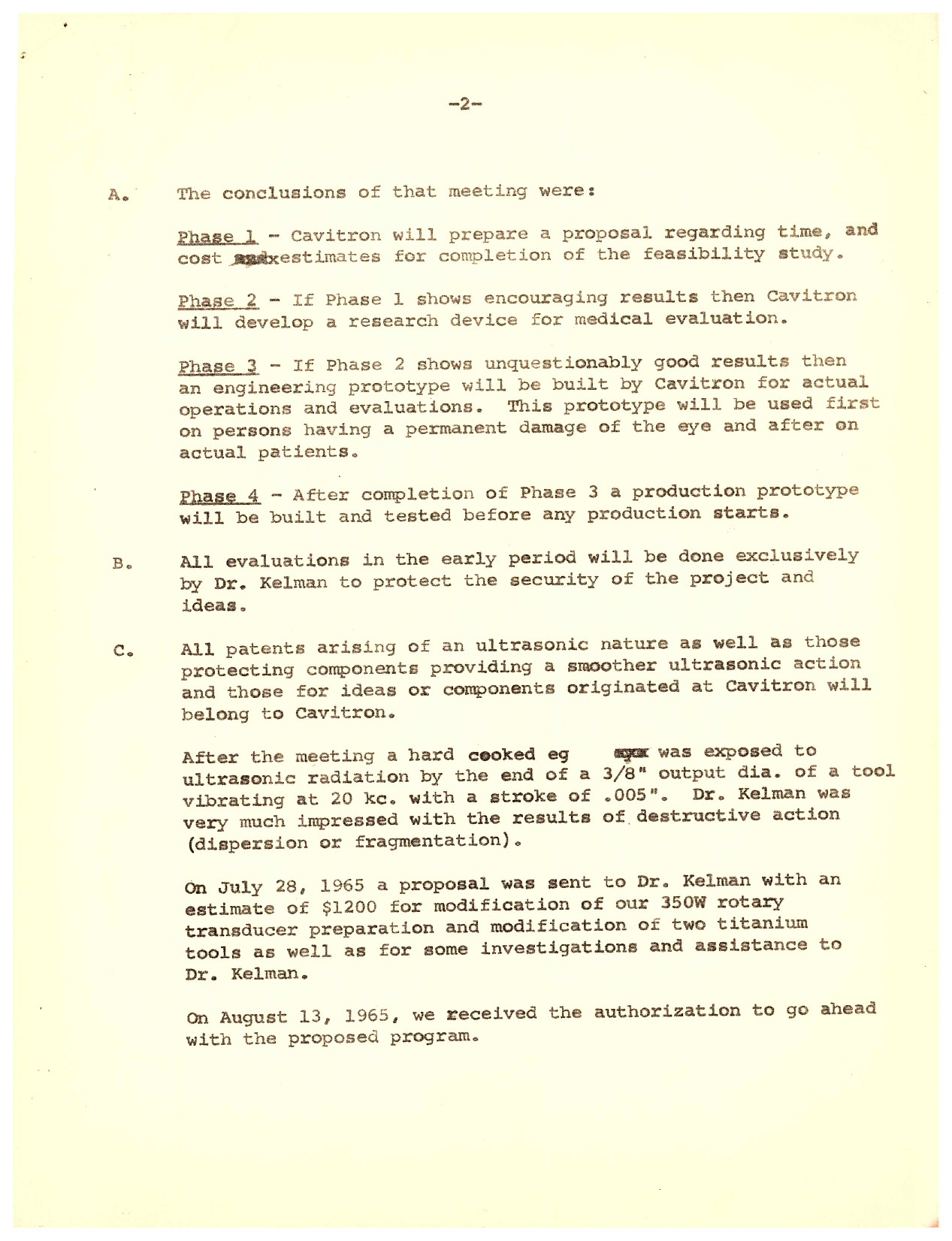
The Ultrasonic Eye Lens Fragmentation project, divided into 4 phases, was approved on July 14, 1965, based on Anton Banko's recommendation and drawings.
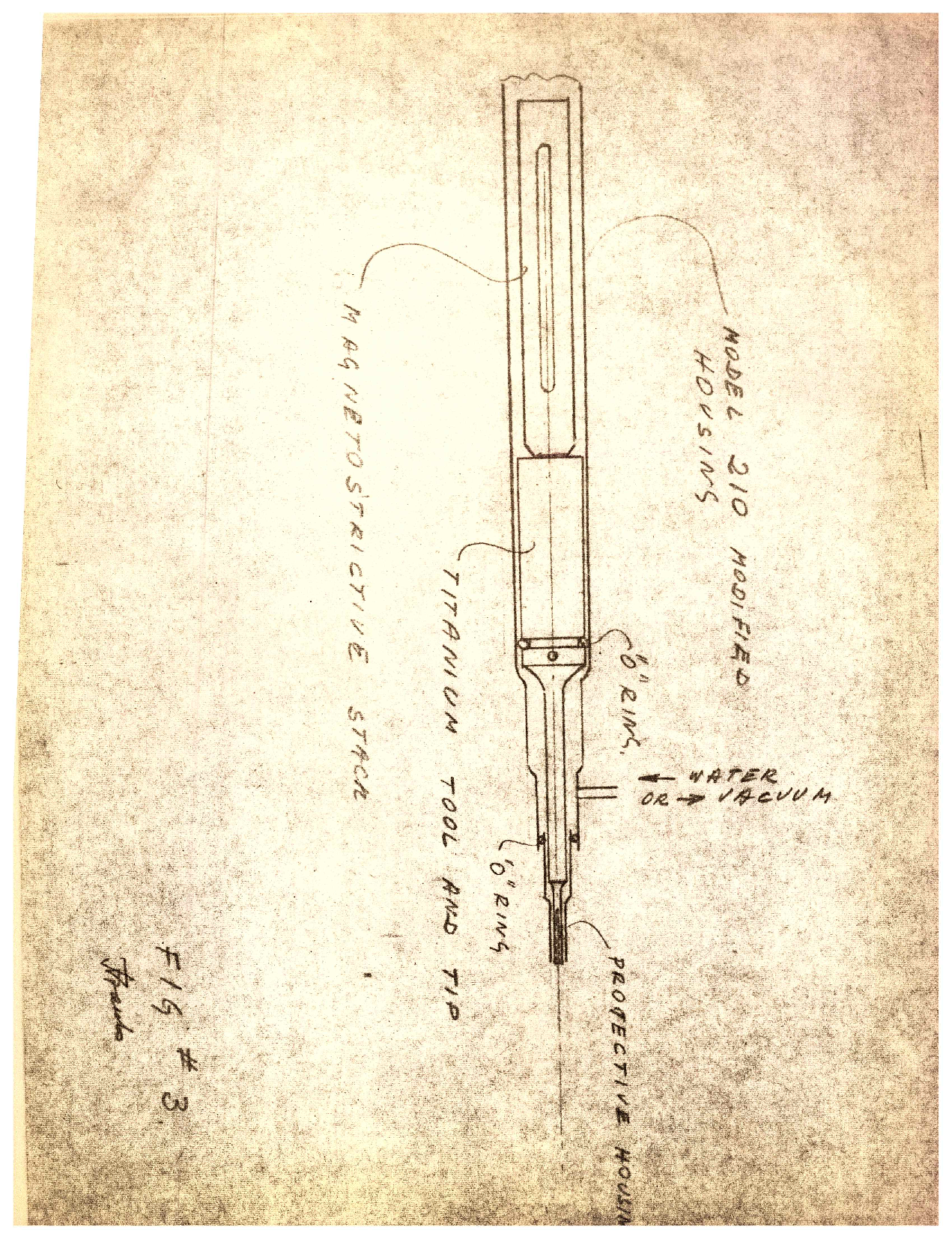
The Memorandum written by Anton also contained four original drawings of possible designs to remove cataracts from the eye. Below is the drawing Fig. 3.
Anton Banko's 1965 design of the world's first ultrasonic instrument to remove cataracts.
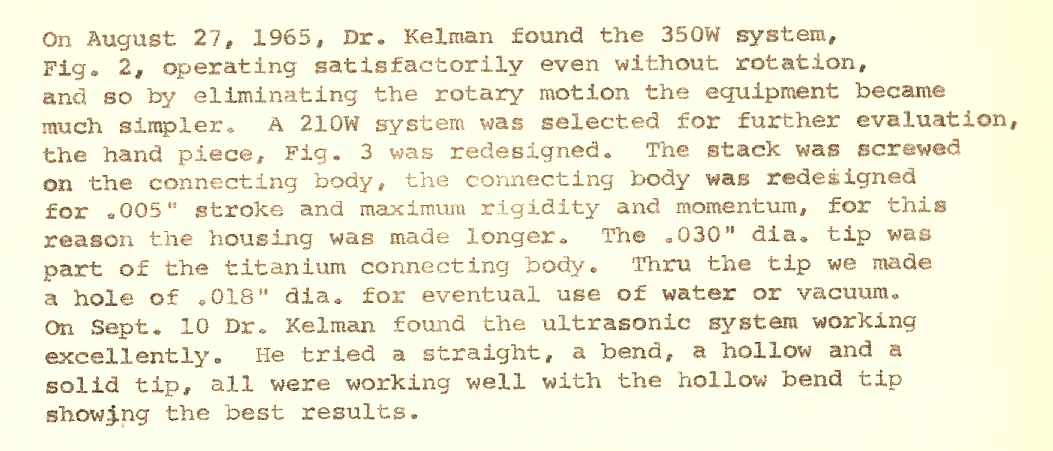
Anton designed a working prototype that Dr. Kelman used on animal eyes on August 27, 1965. Based on the initial testing an improved prototype was developed and on September 10, 1965, Dr Kelman "found the ultrasonic system working excellently."
August 27, 1965, is the first time Charles Kelman removed a cataract with an ultrasonic instrument designed by Anton Banko. Anton and Dr. Kelman worked together from 1965 to 1968.
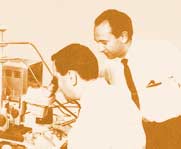
Anton Banko in 1965 with Charles Kelman looking through the microscope and doing surgery on animal eyes.
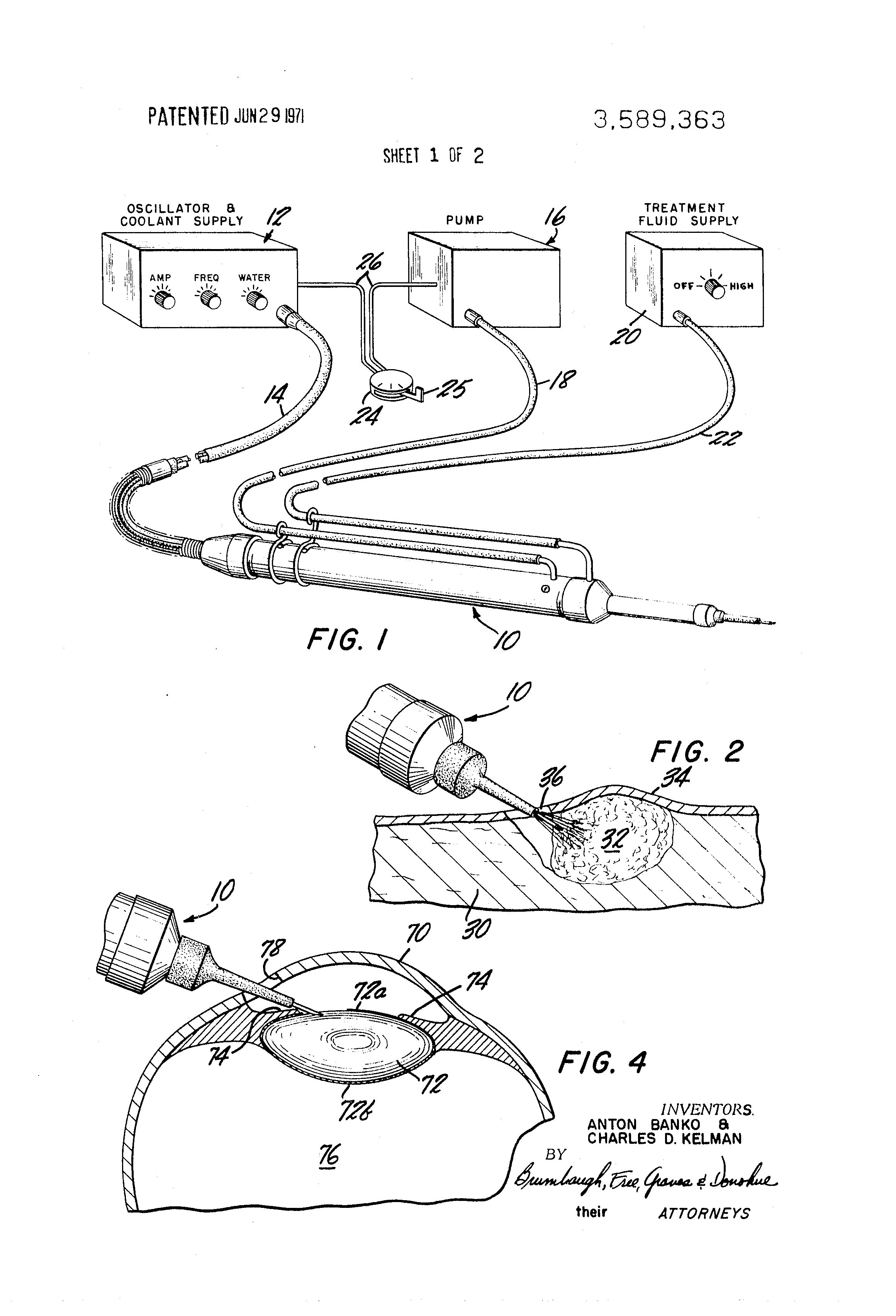
Dr Kelman and Anton (as an employee) assigned patent number 3,589,363 to Cavitron Corporation and Kelman obtained an agreement that he would receive royalties for the sales of the new Cavitron phacoemulsifier.
The June 29, 1971, Anton Banko and Charles D. Kelman, Patent assigned to Cavitron Ultrasonics.
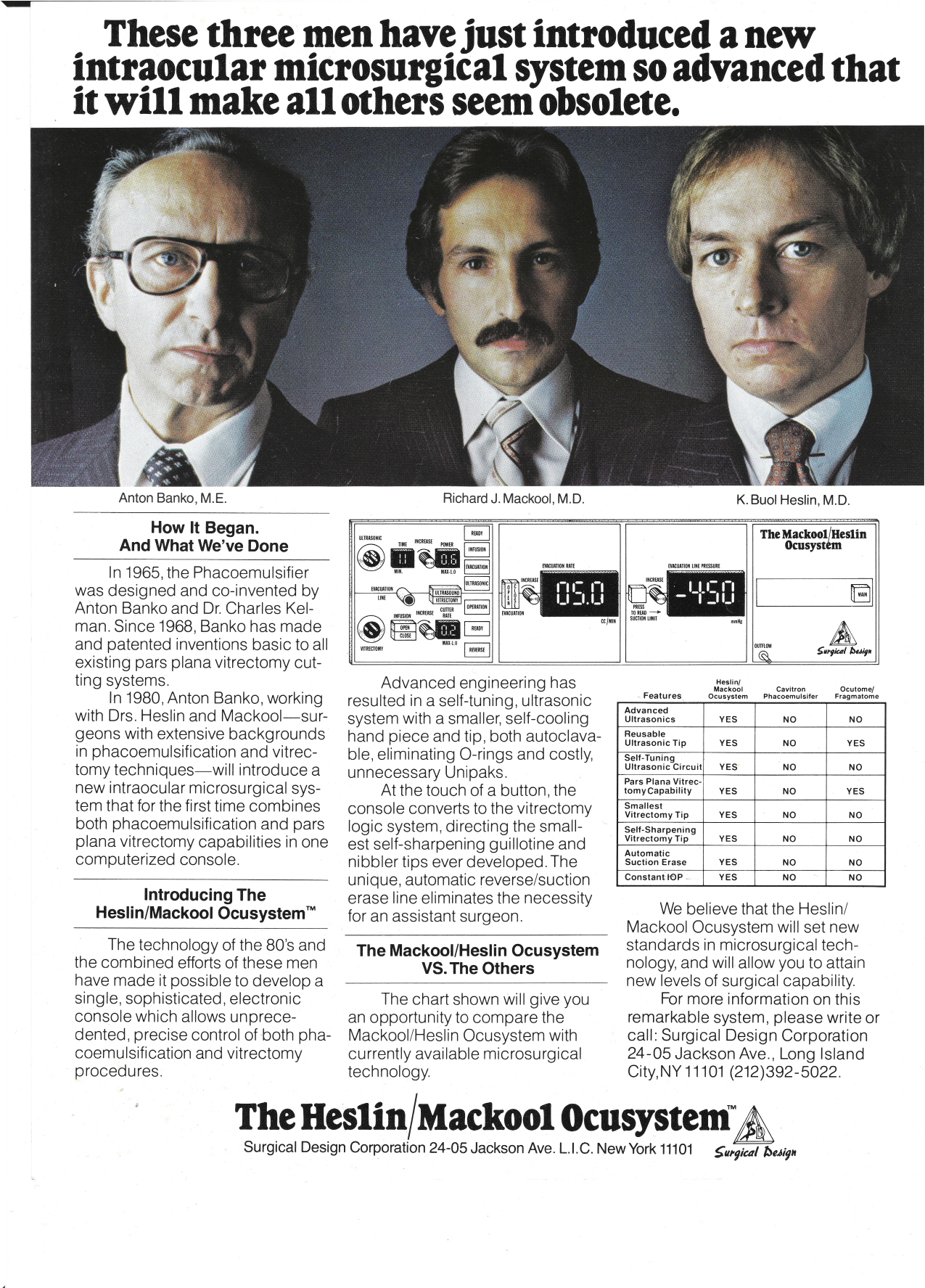
By 1968 Anton founded Surgical Design Corporation and was the first to develop surgical systems for vitrectomy procedures and even obtained patents on the closed vitrectomy surgical procedures. In April 1980, Anton introduced the worlds most advanced cataract surgical system, the Ocusytem at the Los Angeles ASCRS meeting.